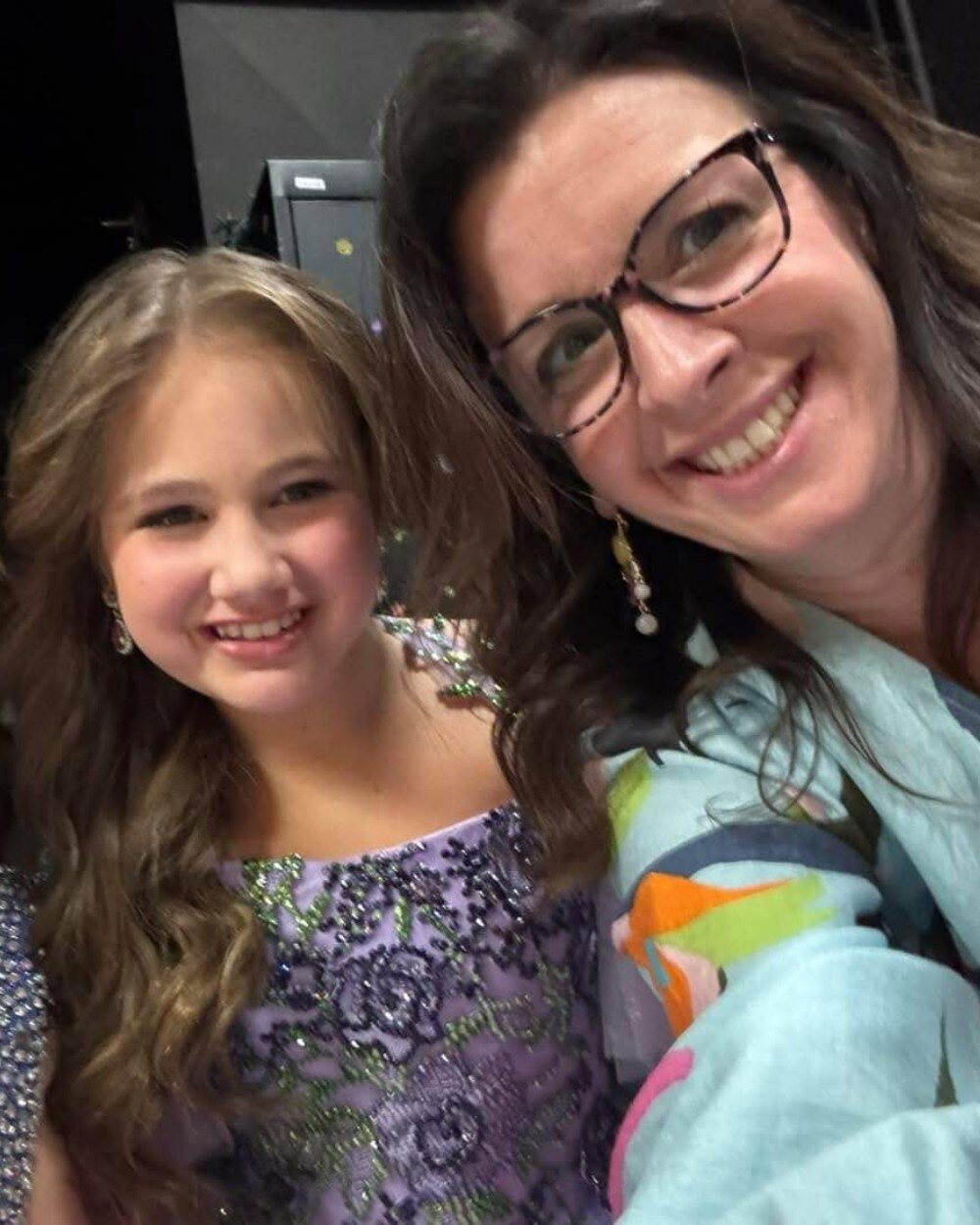
The gown came out of a trash pile at a U-Haul. It was hanging in the parlor when the FedEx driver noticed it and asked whether Mary Oakes's daughter was competing in the local pageant. She wasn't. "But one thing led to another," Oakes says, "and before I knew it, I found myself in the pageant world — and coaching."
Pageantry had been in the house all along, just never aimed at her. Her mother coached and directed in the 1980s; her best friend competed her entire life. Oakes was the dancer, the gymnast, the thespian, the vocalist — "way too busy for pageants." Her daughter followed her into dance, and then, in 2014, was injured, and discovered she didn't have much of a life outside the studio. The gown in the parlor arrived at exactly that moment.
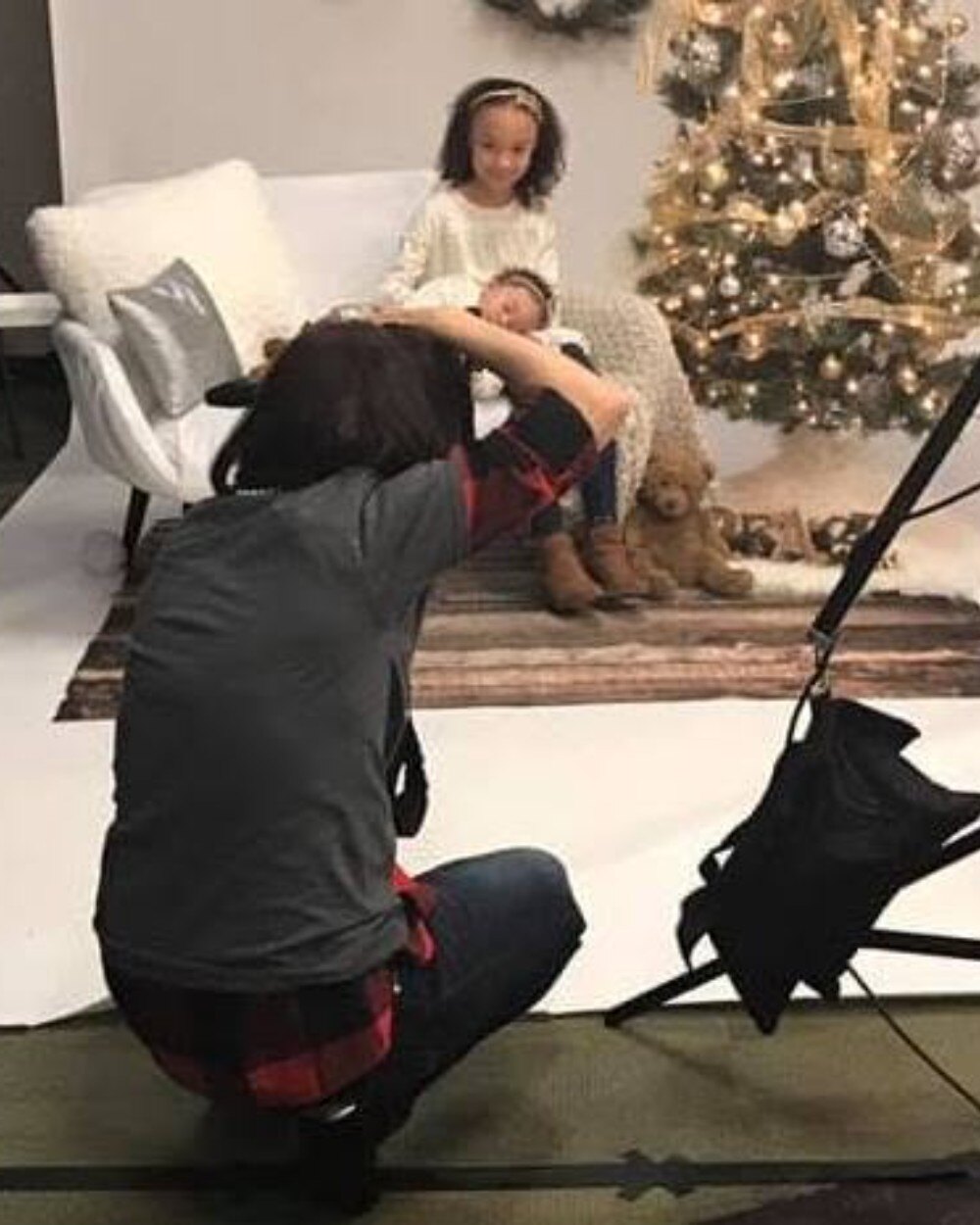
What followed was five years of coaching that worked almost immediately — girls she trained winning titles across multiple divisions — and because photography was her day job, she photographed them too. Then her daughter moved on to other things, and Oakes moved on with her.
In the middle of 2020, a girl asked to be trained the way her daughter had been. Oakes said yes. Standing in her own bathroom curling the girl's hair for her first pageant headshots, she started crying. "I realized how much I had missed it — not necessarily pageants themselves, but pouring into the girls. I missed being the hype woman behind the scenes." Within weeks she had signed on as a state director with a system that had no state pageant in her area.
She produced that state pageant for two years, and helped develop national and international winners, and she ran into the same ethical problems she says she had met everywhere in her first five years. When the national director asked her to manipulate the outcome of a pageant in favor of a contestant she believed she could make more money from, Oakes refused, and resigned in the middle of her own ballroom while the woman stood there yelling at her. She assumed that was retirement. Instead she says the calls, messages and emails came in by the hundreds, asking her to stay — and some of them suggesting it might be time to build something different.
Emissary Pageants International Congress came out of that, built on more than a decade of research and a lifetime spent both backstage and on it. The design question was simple: every delegate competes in an area of her own personal strength, bringing her own talents, experiences and passions to the stage, under four words Oakes keeps at the front — Unshakeable Confidence, Sisterhood, Service, Leadership. What the families wanted, she says, was a home, and a refuge of sorts, for women and girls who loved competing but wanted to do it without the problems they had met elsewhere.
EPIC has been growing since 2023, when the first Ambassadors were crowned, and the summer of 2027 will bring its fourth national event. Where that event goes is not Oakes's decision alone. Delegates nominate states they would like to visit, the nominations go into a fishbowl during the opening number, and the destination is drawn just before crowning — which is how nationals has moved from San Antonio to Philadelphia to Phoenix, with Denver next. The scoring carries the same idea: the optional competition each delegate chooses counts toward the national title, so one girl's strongest category can be talent and another's the service she does at home.

Today she has largely stepped away from coaching, taking about five clients a year — girls who give up their eligibility to compete at EPIC in order to work with her. She still photographs pageant contestants. Her primary work is building EPIC and protecting what it was created to be, and the thing she names first when asked what she is proudest of is not a crown: the rules are in writing, and they hold.
We put our rules in writing, and then we stand on them — even when doing so is difficult.
Which is the practical version of the promise: contestants and families know where the boundaries are, and who they are, who they know, or how much they spend will never move the standard. Her secret favorite part of the job is smaller than that, and she does it herself, every time. She fluffs the gown, straightens the train, tucks away the dress loops, and reminds the girl that she is ready, that she is encouraged, that she is loved — and, when welcomed, prays over her. Then the first step onto the stage. "You've got this. Now go be EPIC."
Backstage at EPIC, she says, the dressing room tables hold encouragement, hairspray, rhinestones and Starburst. When there is no stage in the weekend at all, she is usually on the water: as founder of the Texas Auxiliary Scout Support Association she helps keep a fleet of a dozen sailboats running, raises money for the programs, and teaches young people on-the-water skills — another way of handing someone the chance to find out what she is capable of. The rest goes to the farm with her family, travel with her significant other, and the occasional lazy day of Netflix and ice cream.
When she started, she says, she did what everyone else did, until she noticed she was different: she wouldn't bend the rules, and that decision changed everything. What nobody told her was the rest of it — that she would watch contestants find confidence they did not know they had, find a place where they felt accepted, and build friendships and skills that outlast the stage. That realization changed how she looks at directing.
One director to another
When you have the opportunity to make that kind of impact, every part of your pageant should be well thought out and have a purpose. The rules should have a purpose. The competitions should have a purpose. The traditions, activities, and even the little moments behind the scenes should have a purpose. Because you aren't just producing a pageant. You are creating an experience that has the potential to become part of someone's story.