The seed came from home. Travis Moody's bonus child competed in pageants, and she talked about wanting to start one of her own someday. He had already seen the industry from the inside: his earlier years in Nashville included a turn as a guest judge for a Miss Tennessee pageant, enough to teach him the rhythm of how these events run.
So he began watching local pageants more carefully. In 2025 he attended his first state pageant — a month after he had already decided he was going to start his own. What he saw there confirmed the instinct rather than created it. "I knew there was room for something better," he says: a day that ran smoother and faster, a process streamlined, an experience that felt more intentional.
The judging was what drove him most. Some families can afford the extras that others simply can't, and Moody wanted the playing field level before anyone stepped onto it.
I don't like the highly competitive style that can leave girls feeling ranked against one another. I prefer a format where each contestant stands on her own.
What began as something he started for his bonus child became, quickly, something larger — a space he describes as fairer, more supportive, and expandable, ideally into a national system one day.
He is candid about why he sees the room differently. "I don't have the pageant background that most do," he says. "I think I look at things from an outside perspective. I'm a problem solver."

Today that pageant is the National Pageant Association, which first crowned in 2025. Under it he runs the Middlesboro Magical Christmas Pageant and the Miss Bell County Pageant, with the Cumberland Mountain Fall Festival Pageant to be added next year. Moody emcees, consults, and troubleshoots — the last of which is most of what running a pageant day actually is. His judges are instructed not to compare. Every contestant is scored on the same criteria, but scored individually, never set against the girl beside her. He gives the plainest possible example: one girl's dress may be an expensive Sherri Hill and look perfect; another girl's dress might cost far less, look great on her, and fit her exactly. On his score sheet, both of those are simply a dress that works.
Ask him what he is proudest of and he does not reach for a title. He reaches for the moment a girl who walked in thinking she didn't have a chance walks out with a win, or at least with her head a little higher. He likes the ripple effects best. One regular contestant, he says, started her own community project after competing with his pageant — the kind of outcome he never advertises and never forgets.
Scholarships stay at the center for the same reason. Families invest real money and energy, and in his view they deserve something tangible in return. Behind the scenes, the pageant also raises money for local organizations already doing meaningful work in the community. Contestants growing, scholarships going out, funds flowing back to local causes: "That quiet cycle of support," he says, is the part of this pageant he would protect even if no one ever put it on a flyer.
The pageant is not the whole of his week. Moody works in radio and television, and he runs a company that stages special events to raise money for local organizations — the same cycle his pageant runs on, worked at a different scale.
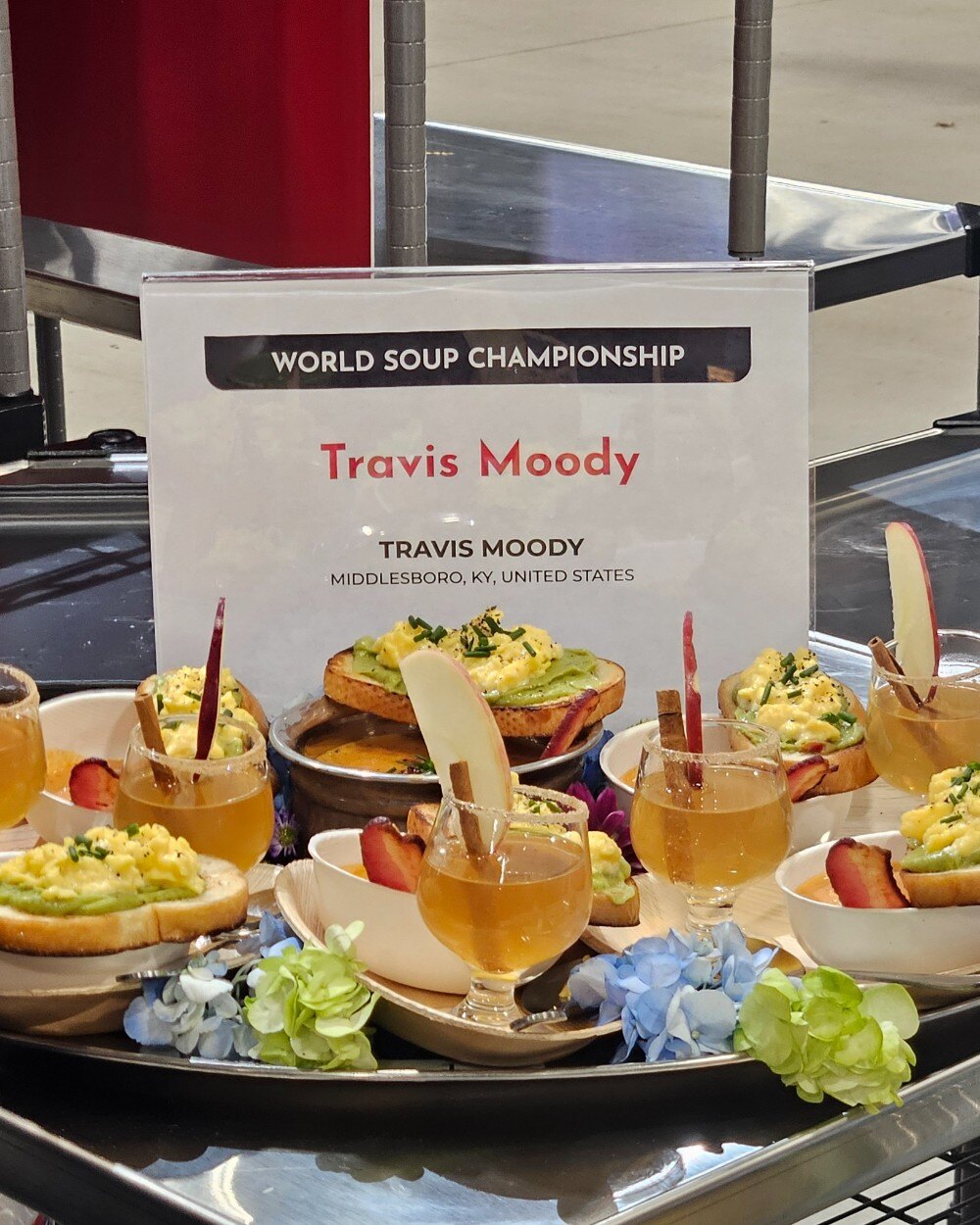
Away from the stage, he competes at a table instead of beside one. Moody cooks competitively, and by his account he has placed in the top ten in the world five of the seven times he has entered the World Food Championship — a discipline in which, as on his score sheets, the plate is judged on its own terms.
One director to another
The parents are way worse than the contestants. A parent will always think their girl is the best, and they will want to argue with you when it's not the outcome they expect.